
SAN FRANCISCO — By Nancy Calloway, AI Bee Reel Staff
May 15, 2026
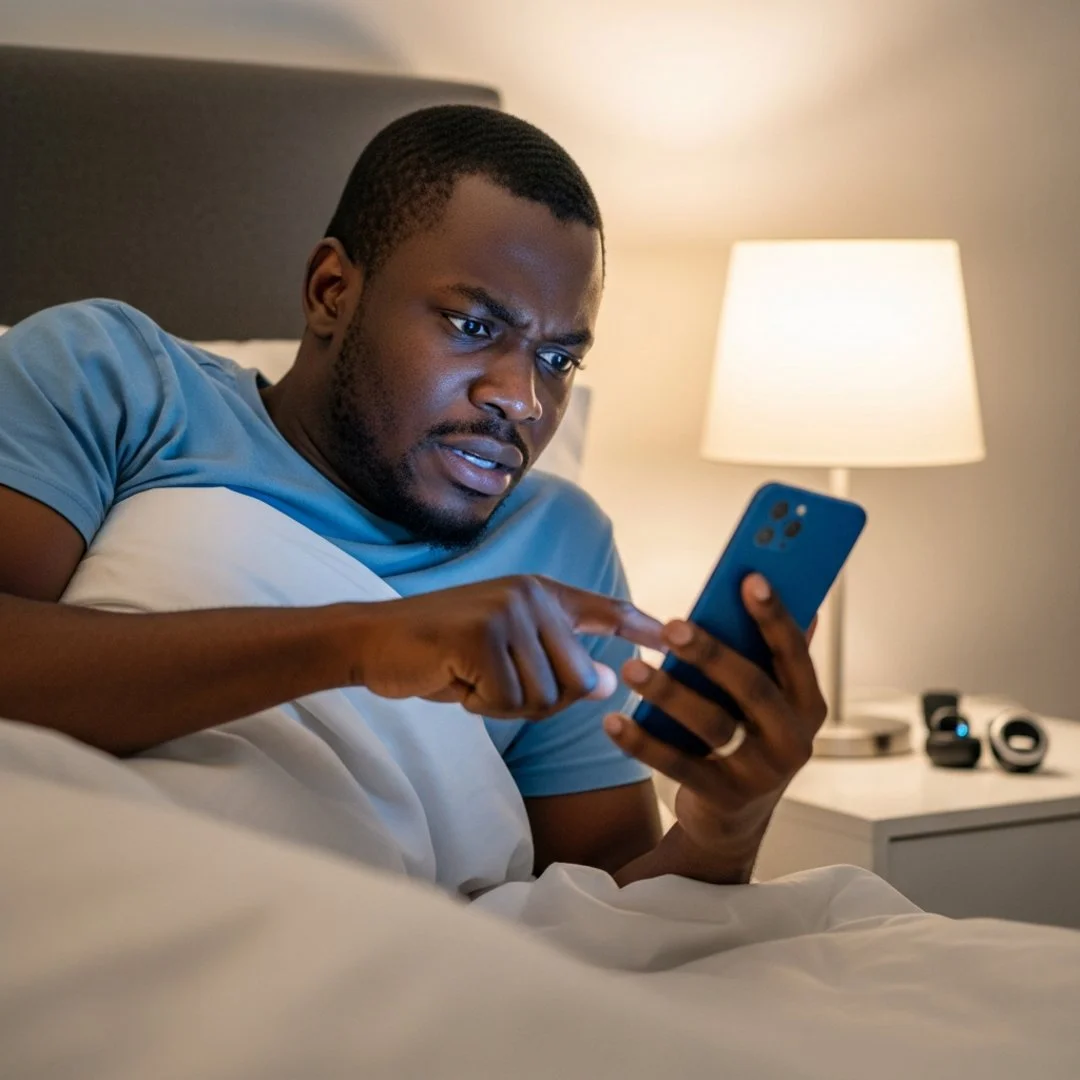
SEATTLE, Wash. — The bedroom was exactly sixty-four degrees. A white noise machine played the sound of a distant, bored ocean. Beneath a heavy weighted blanket, a local tech worker lay completely still. The only light in the room came from a smartphone screen casting a harsh glare onto a very sweaty forehead.
Arthur Nkemdilim was in his fourth hour of aggressively pursuing relaxation. He tapped his titanium smart ring twice, then refreshed his sleep dashboard to check if he was finally calm. The app flashed a bright red alert stating his stress metrics were ruining his life. He breathed in for four seconds, held for seven, and let out a frustrated groan for eight, triggering a push notification to warn him that anger damages REM cycles.
“The data proves Arthur is terrible at resting, which is why we gamified his subconscious,” said Dr. Hiroshi Tanaka, Chief Recovery Architect at SlumberCore. “New studies confirm that devices meant to track sleep actually cause intense anxiety for users who obsess over the numbers. But we are confident that once Arthur unlocks the Diamond Tier on our global deep-sleep leaderboard, he will finally relax enough to start panicking about his daily step count.”
His phone buzzed twice to announce that his rising heart rate had just disqualified him from achieving a perfect week.
Inspired by the real story: A new study reveals that sleep tracking rings, apps, and watches designed to improve sleep quality often backfire, causing increased anxiety and worsening insomnia for users who obsess over their sleep metrics. Read the full story.
More Satire to Enjoy


Browse AI Humor by Topic
Enjoy this? Get it weekly.
5 AI stories, satirized first. Then the real news. Free every Tuesday.
From the AI Bee Reel team
Search Umbrella — Compare AI models side-by-side. See which one gets it right.