
SEATTLE — By William Adeyemi, AI Bee Reel Staff
July 10, 2026
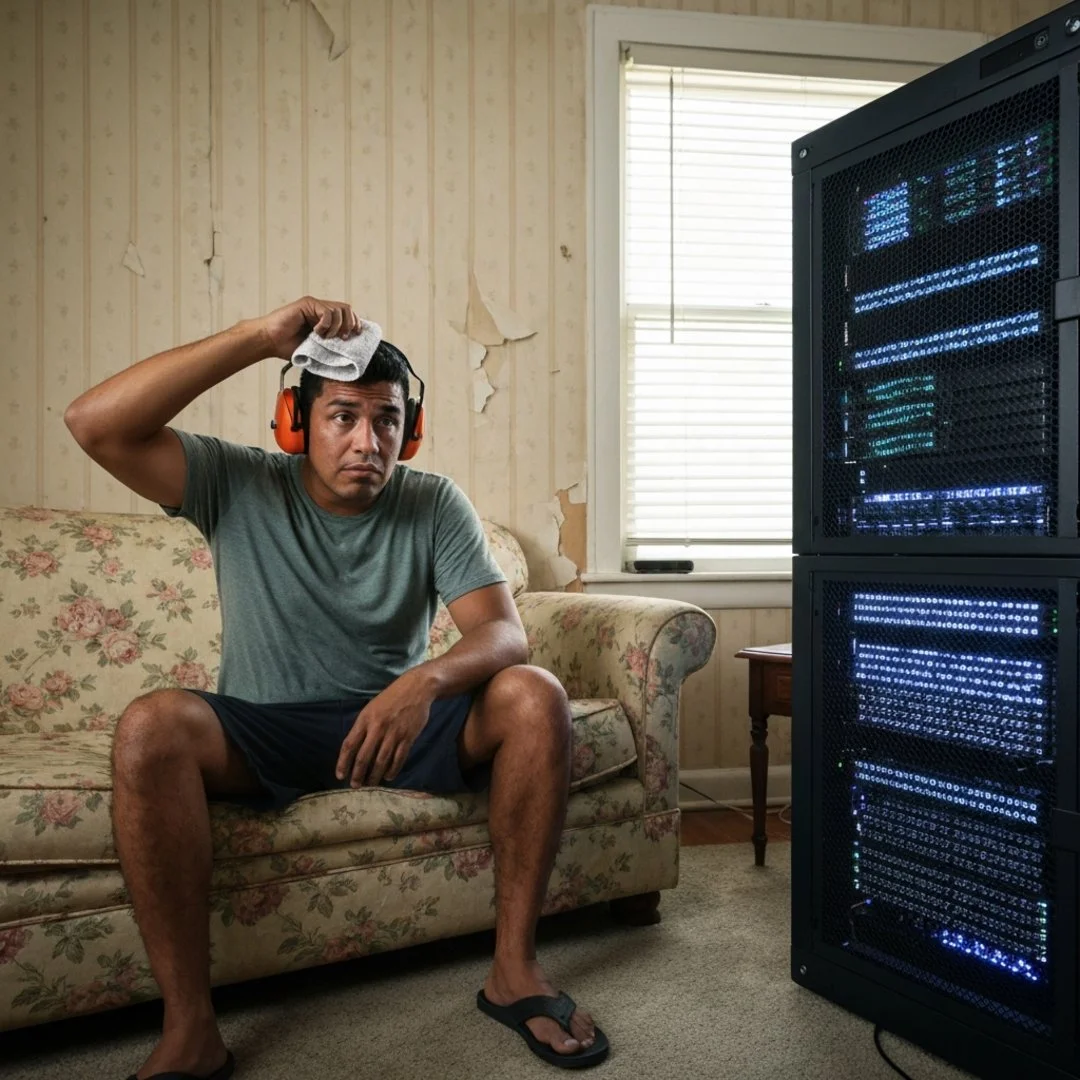
FRESNO, Calif. — The living room was ninety-eight degrees, and the wallpaper behind the television had begun peeling in long, damp strips. On a floral sofa, a family of four sat rigid, wearing heavy-duty industrial earmuffs. In the corner stood a seven-foot-tall, black server rack pulsating with neon blue LED lights and emitting a continuous, deafening shriek.
The father gripped a television remote, pressing the volume button until the screen displayed “MAX.” He leaned forward, squinting to read the closed captions over the roar of the exhaust fans. Suddenly, the server rack’s lights flared violently, bathing the room in an aggressive strobe effect. The cooling system kicked into overdrive, blowing a stack of unopened mail off the coffee table. The family simply tightened their earmuffs, having agreed to live inside a loud, glowing oven so that someone three states away could ask ChatGPT to write a poem about a toaster.
“It is mostly background noise, except when the machine has to render a deepfake,” said Julian Vargas, a local optometrist, wiping sweat from his forehead with a damp washcloth. “Sunrun started this pilot program to use our rooftop solar and home battery to power distributed AI compute nodes. They pay us forty dollars a month, which is a great deal if you ignore the fact that my wife now has to wear a welding helmet to read a book in the evening.”
Vargas turned his attention back to the silent television just as the server rack initiated a liquid cooling flush, spraying a fine mist of warm antifreeze across the sleeping family dog.
Inspired by the real story: Sunrun is launching a pilot program to pay customers to host AI compute nodes utilizing their solar and battery systems. Read the full story.
More Satire to Enjoy


Browse AI Humor by Topic
Enjoy this? Get it weekly.
5 AI stories, satirized first. Then the real news. Free every Tuesday.
From the AI Bee Reel team
Search Umbrella — Compare AI models side-by-side. See which one gets it right.